


Add the Commonwealth Report to your Google feeds
Good Day, this is the Commonwealth Report:
Geeky Science Friday!
News for the public, not the powerful.
Will Big Tech Sink Its Data Centers in Your Drinking Water?
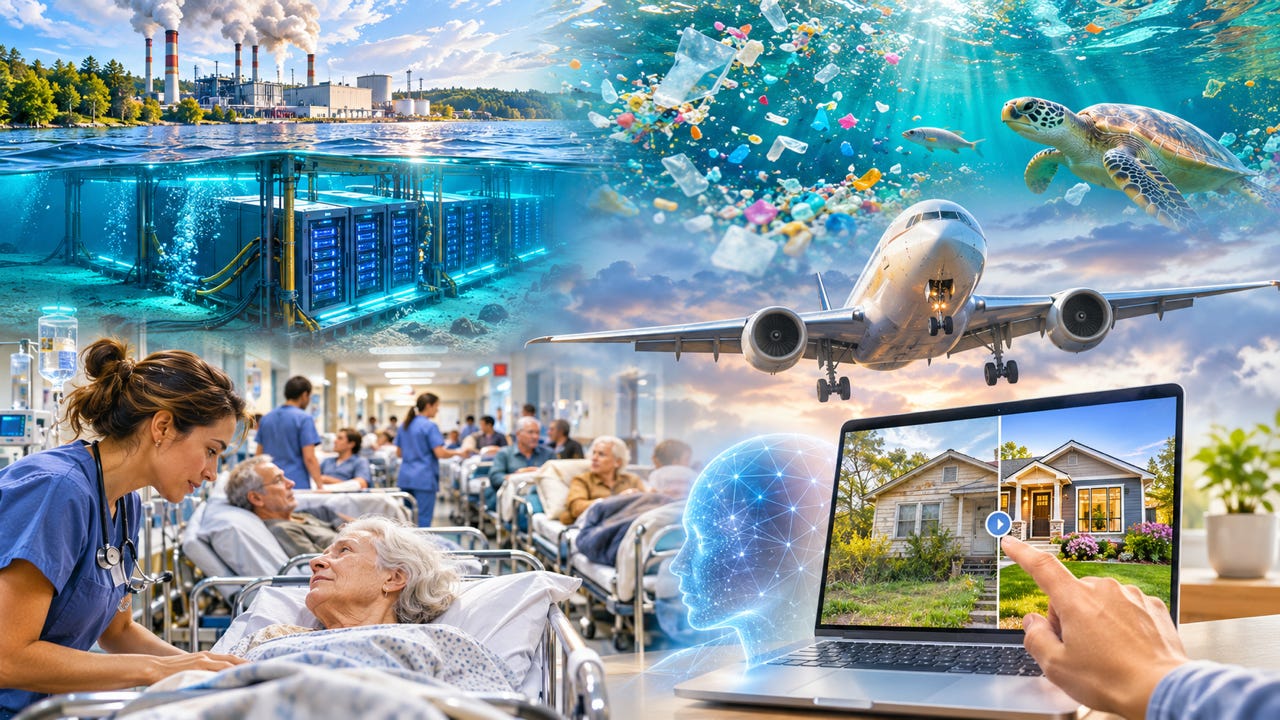
The Trump administration is weighing plans for four sealed underwater data center pods off Maine and Alaska, and the Guardian reports Great Lakes advocates are bracing for the idea to come their way next. Tech companies love it because cold water cuts cooling bills, and no neighborhood can organize against a server farm on a lake bottom. John Lipaj of the Lake Erie Foundation warns that waste heat could feed the algae blooms already choking the warmest Great Lake, and that batteries and fluids could leak into water 30 million people drink. His group wants Ohio, New York and Michigan to write rules before the first application lands. Meanwhile the Financial Times reports Anthropic signed a $3.4 billion deal for 1.7 gigawatts of gas fired generators, the largest known power purchase by any AI lab. When the industry can’t get on the grid, it burns gas. When it can’t get past the neighbors, it goes underwater. Either way, the public pays.
Satellites See It From Space. Why Is the Pacific Turning Cyan?
Scientists at the University of Bergen in Norway say the Great Pacific Garbage Patch now holds so much plastic it’s changing the color of the ocean. Their study, published Thursday in Communications Earth and Environment, examined satellite records from 2002 to 2022 and found the water between Hawaii and California brightening in blue and green wavelengths, turning cyan compared to the sea around it. Researcher Dan Koestner started by blending plastic waste into what he called smoothies and hitting them with lasers to learn how microplastics scatter light. When the team added that signature to their simulations, the odds of producing the color seen from orbit jumped more than fourfold. Lead author Shea Cheatham says the next step is sampling the water directly. Koestner says if plastic is “altering the ocean’s color, that’s pretty alarming.” We’ve dumped so much garbage into the sea you can see it from space. That’s the legacy of an economy that treats the planet as a landfill.
Why Are Americans Spending a Full Day on Gurneys in Hospital Hallways?
The Wall Street Journal reports emergency rooms across America have turned into medical waiting rooms, with admitted patients stuck on hallway stretchers for 12, 24, even 30 hours waiting for a bed. A Health Affairs study of 1,500 hospitals found one in four patients admitted through the ER now waits at least four hours for a bed, up from one in eight in 2017, and the share boarded for a full day has tripled. From April through June this year the median wait hit five hours, up 25% in a single year, according to the consulting firm Vizient. Dr. Alexander Janke of the University of Michigan, who co-wrote the study, said it’s “much worse than it has ever been.” Research shows every hour of boarding makes patients measurably sicker. This is what happens when hospitals chase margins, the ranks of the uninsured grow again, and nobody in power treats health care as a right.
The news you need. Twice every weekday.
Learjet Nosedives Into a Florida Highway. Is It Still Safe to Fly?
On November 1 a Learjet 60 bound from Austin, Texas to the Bahamas plunged 35,000 feet nose first into a Palm Beach County roadway, killing all nine aboard, including a couple with two young children and a 20 year old co-pilot who’d reported icing and turbulence minutes earlier. Dashcam video caught the jet hitting the ground at more than 30,000 feet per minute. After that crash and last year’s Air India disaster, the Daily Mail asked scientists whether flying has become more dangerous. Their answer is no. Jan-Arwed Richter of the German aviation safety bureau JACDEC says we’re living in “the safest era of air travel in history.” But there’s a catch. Commercial airlines have gotten steadily safer over 25 years while private jets, small aircraft and helicopters remain far riskier. That safety record came from decades of regulation, union pilots and independent public investigators. Starve the FAA and the NTSB of staff and funding, and those numbers won’t stay reassuring for long.
Is That Dream Home Real, or Did a Computer Invent It?
Washington state real estate agents are sounding the alarm as AI makeovers spread through home listings, a practice being called “very deceptive.” Buyers tour homes and find vinyl floors that looked like hardwood online, dirt where a lawn was promised, and rooms too small for the furniture the software added. A listing in Vancouver, Washington led its Zillow gallery with six unlabeled AI renderings of a renovated home before the photos of the worn down property actually for sale. One analysis found nearly 11% of listing images showed signs of digital alteration, and more than 90% of those carried no disclosure. The Northwest Multiple Listing Service requires altered photos be labeled, but enforcement is spotty. California now mandates disclosure and the original photo. In the priciest housing market in a generation, working families burn vacation days chasing homes that don’t exist. Honest listings shouldn’t be optional. They should be the law.
And that’s the way it is, Today Friday November 13, 2026. I’m Thom Hartmann.


