


Add the Commonwealth Report to your Google feeds
Good Day, this is the Commonwealth Report:
Special Edition : Democratic Firsts
News for the public, not the powerful.
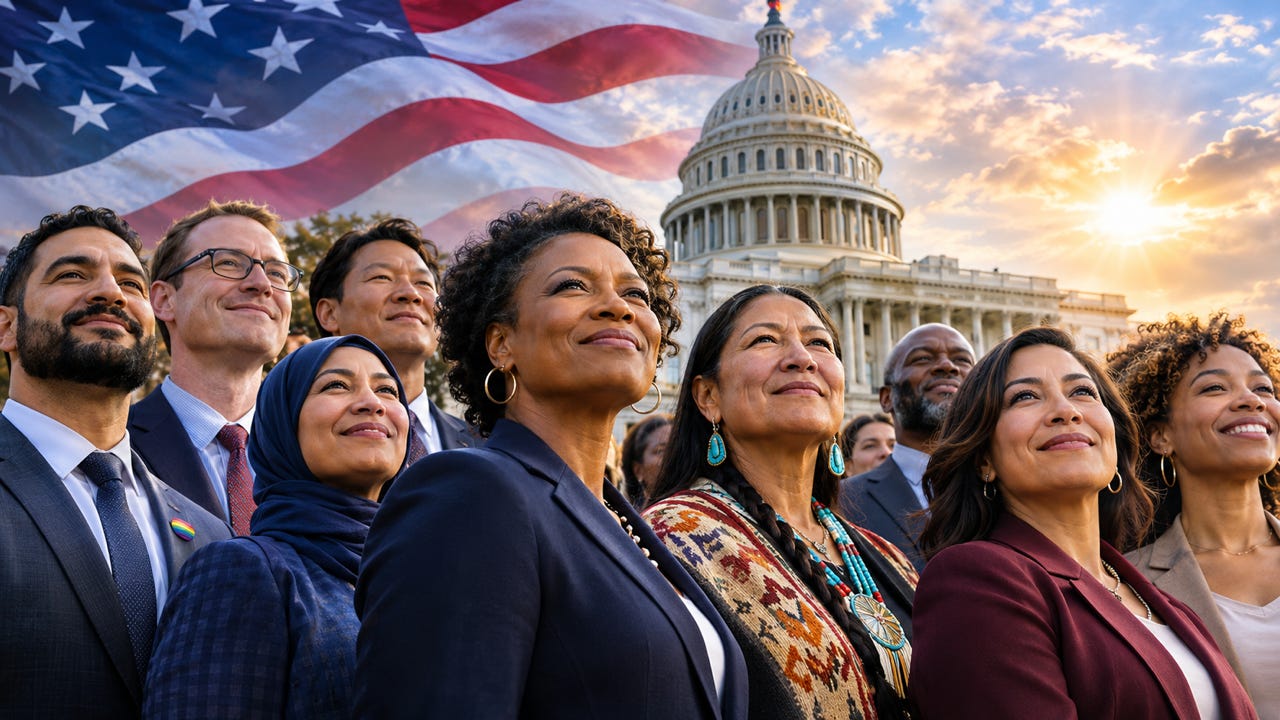
Today, we're looking at something extraordinary that happened in America on Election Day.
Democrats took back the House and Senate, dealing Donald Trump a political setback. But another story may outlast this Congress.
People once excluded from the highest offices broke barriers that stood for generations.
Start in Georgia, a state whose history is inseparable from slavery, segregation, and the struggle for voting rights. Voters elected Keisha Lance Bottoms, the first Black woman ever elected governor of any American state. Think about that. Two hundred and fifty years into the nation's history, and it had never happened before. Until now.
In New Mexico, Deb Haaland became the first Native American woman elected governor. A citizen of Laguna Pueblo, Haaland has already made history in Congress and as America's first Native American Cabinet secretary. Now she's made it again, in a country where Indigenous people were systematically dispossessed of their land and political power.
And in Minnesota, Peggy Flanagan, a citizen of the White Earth Band of Ojibwe, became the first Native American woman elected to the United States Senate. For generations, Native Americans were denied a meaningful voice in decisions that shaped their lives. Now one of those voices will speak from the Senate floor.
Michigan made history, too. Abdul El-Sayed became the first Muslim elected to the United States Senate. He won despite attacks that questioned his identity, his religion, and even his Americanness. His victory makes a simple constitutional principle visible. There is no religious test for public office in this country.
In New Hampshire, Chris Pappas became the first openly gay man elected to the Senate. Not so long ago, an openly gay candidate for national office faced obstacles that could end a political career before it began. This week, voters wrote a different ending.
And in Illinois, Juliana Stratton's election means that she and Tammy Duckworth will make their state the first represented in the Senate by two women of color at the same time.
Now look at the governors' mansions
Texas elected Gina Hinojosa, its first Latina governor, ending decades of Republican control of that office. Ohio elected Amy Acton, its first woman governor. Minnesota elected Amy Klobuchar, also its first woman governor.
Wisconsin elected David Crowley, its first Black governor.
Nevada elected Aaron Ford, its first Black governor.
And California elected Xavier Becerra, its first Latino governor since the nineteenth century.
These aren't just records. They reveal who was missing from the rooms where decisions are made.
The breakthroughs reached the House of Representatives as well.
In Colorado, Melat Kiros became the first woman from Generation Z elected to Congress.
In Massachusetts, Dan Koh became the first Asian American elected to Congress from his state.
In New York, Claire Valdez became the first Native American woman elected to Congress from New York.
New Jersey elected Adam Hamawy, its first Muslim member of Congress.
Michigan elected Jeremy Moss, its first openly gay member of Congress.
These changes also crossed seemingly permanent political boundaries.
Kansas elected Democrat Adam Hamilton to the Senate, ending a Democratic drought stretching back to 1932.
Texas elected Democrat James Talarico, giving the state its first Democratic senator elected since 1988.
These are reminders that political maps aren't carved in stone. Voters can redraw them.
There is another number worth remembering. Preliminary results indicate that seventeen states will have women governors, a new record. And three Black women will serve simultaneously in the United States Senate, another first.
Not every historic victory belonged to a Democrat.
Florida elected Republican Byron Donalds as its first Black governor, and Tennessee elected Republican Marsha Blackburn as its first woman governor. Those milestones matter, too, because history doesn't belong to one political party.
But the Democratic victories tell a particularly striking story about this election. Women, Native Americans, Black Americans, Muslim Americans, LGBTQ Americans, and younger Americans didn't simply ask to be included. They ran, organized, persuaded voters, and won.
And there's one more possibility ahead. With Democrats regaining the House, Hakeem Jeffries is positioned to become the first Black speaker in American history. That hasn't happened yet. The new Congress must organize and choose its leadership. But even the possibility shows how dramatically the political landscape has shifted.
Here's the bigger picture.
For much of our history, American democracy promised equality while denying millions of people the chance to exercise power. Women fought for the ballot. Black Americans fought against disenfranchisement. Native Americans fought for recognition and representation. Religious minorities and LGBTQ Americans fought to be treated as full citizens.
Those struggles didn’t end Tuesday. Winning an election doesn’t erase discrimination, guarantee good government, or settle the battles ahead.
But it changes what’s possible.
A child watching tonight can look at a governor, a senator, or a new member of Congress and see someone who looks like them, worships like them, or shares their history.
And that child can say something previous generations were too often taught never to imagine.
That could be me.
This was more than an election of firsts. It was a reminder that the American story is still being written, and the people writing its next chapter look more like America than ever before.
And that’s the way it is, Today Thursday November 12, 2026. I’m Thom Hartmann.
The news you need. Twice every weekday.
2026 Midterm Election Firsts: Stories and News Links
Here are the historic election first links from the research for today’s special article.
Historic Senate firsts
1. Abdul El-Sayed becomes America’s first Muslim U.S. senator
Michigan voters made history by electing Abdul El-Sayed, the first Muslim American senator, overcoming attacks on his religion and opening a new chapter in American political representation.
The Guardian — Historic midterm firsts
2. Peggy Flanagan becomes the first Native American woman elected to the Senate
Minnesota elected Peggy Flanagan, a citizen of the White Earth Nation, making her the first Native American woman to win a United States Senate seat in history.
Associated Press — Historic election milestones
3. Chris Pappas becomes the first openly gay male U.S. senator
New Hampshire elected Chris Pappas, making him the first openly gay man in United States Senate history, a landmark victory for LGBTQ representation in America’s highest legislative chamber.
The Guardian — Chris Pappas and other historic winners
4. Illinois elects two women of color to represent the state in the Senate
Juliana Stratton’s victory means Illinois will become the first state represented simultaneously by two women of color in the Senate, joining incumbent Democratic senator Tammy Duckworth.
Associated Press — Juliana Stratton’s historic election
Historic governor firsts
5. Keisha Lance Bottoms becomes America’s first Black woman governor
Georgia voters elected Keisha Lance Bottoms, making her America’s first Black woman governor after 250 years of history and breaking a barrier that had survived generations.
The Guardian — Keisha Lance Bottoms makes history
6. Deb Haaland becomes America’s first Native American woman governor
New Mexico elected Deb Haaland, a member of Laguna Pueblo and former Interior secretary, making her the first Native American woman elected governor in American history.
Philadelphia Inquirer — Historic gubernatorial victories
7. Gina Hinojosa becomes Texas’s first Latina governor
Texas voters elected Democrat Gina Hinojosa, making her the state’s first Latina governor while ending Republican control of the governor’s mansion that stretched back to 1995.
The Guardian — Gina Hinojosa’s Texas victory
8. Amy Acton becomes Ohio’s first woman governor
Ohio voters elected Democrat Amy Acton, the state’s first woman governor, defeating Republican Vivek Ramaswamy and ending more than a decade of Republican control of the office.
The Guardian — Amy Acton’s historic win
9. Amy Klobuchar becomes Minnesota’s first woman governor
Minnesota voters elected longtime Democratic senator Amy Klobuchar, making her the first woman to serve as governor in the state’s history after defeating Republican Lisa Demuth.
The Guardian — Minnesota’s first woman governor
10. David Crowley becomes Wisconsin’s first Black governor
Wisconsin elected Democrat David Crowley, making him the state’s first Black governor after a competitive campaign against Republican Tom Tiffany and a dramatic return to the race.
The Guardian — David Crowley’s victory
11. Aaron Ford becomes Nevada’s first Black governor
Nevada voters elected Democratic attorney general Aaron Ford, making him the state’s first Black governor after defeating Republican incumbent Joe Lombardo in a closely watched election.
Associated Press — Nevada’s historic election
12. Xavier Becerra becomes California’s first elected Latino governor
California elected Democrat Xavier Becerra, making him the state’s first elected Latino governor and the first Latino to hold the office since Romualdo Pacheco in 1875.
The Guardian — Xavier Becerra’s California victory
Historic House of Representatives firsts
13. Melat Kiros becomes the first Gen Z woman elected to Congress
Colorado voters elected 29-year-old Melat Kiros, making her the first Generation Z woman in Congress and the first Black woman elected to represent Colorado in the House.
Roll Call — History-makers of the new Congress
14. Dan Koh becomes Massachusetts’s first Asian American member of Congress
Massachusetts elected Democrat Dan Koh, the son of Korean American and Lebanese American parents, making him the first Asian American elected to Congress from the Bay State.
Roll Call — Dan Koh’s historic election
15. Claire Valdez becomes New York’s first Native American congresswoman
New York elected Democrat Claire Valdez, a citizen of the Ysleta del Sur Pueblo, making her the first known Indigenous woman from New York elected to Congress.
Business Insider — Historic midterm winners
16. Adam Hamawy becomes New Jersey’s first Muslim member of Congress
New Jersey voters elected Adam Hamawy, an Egyptian American former Army surgeon, making him the state’s first Muslim member of Congress after winning its 12th Congressional District.
Roll Call — Adam Hamawy’s historic victory
17. Jeremy Moss becomes Michigan’s first openly gay member of Congress
Michigan elected Democrat Jeremy Moss, making him the state’s first openly gay member of Congress and marking another milestone for LGBTQ representation in the United States House.
Fast Company — Historic election firsts
18. Jessica Killin becomes the first Democrat elected in Colorado’s Fifth District
Colorado voters elected Democrat Jessica Killin, an Army veteran, making her the first Democrat to represent the state’s Fifth Congressional District since its creation after the 1970 census.
Roll Call — Jessica Killin’s historic victory
Historic political breakthroughs
19. Kansas elects its first Democratic U.S. senator in 94 years
Kansas voters elected Democrat Adam Hamilton, defeating Republican Roger Marshall and ending a 94-year Democratic Senate losing streak in a state long dominated by Republican candidates.
Associated Press — Adam Hamilton’s Kansas upset
20. Three Black women will serve simultaneously in the U.S. Senate
Juliana Stratton’s Illinois victory means three Black women will serve simultaneously in the United States Senate for the first time, marking another milestone in congressional representation.
Associated Press — Record Senate representation
21. Five Black governors will serve simultaneously for the first time
Victories in Georgia, Wisconsin, Nevada and Florida, alongside Maryland Governor Wes Moore’s reelection, mean five Black governors will serve simultaneously, an unprecedented moment in American history.
Associated Press — Historic number of Black governors
22. Hakeem Jeffries could become America’s first Black House speaker
Democrats’ victory in the House positions Hakeem Jeffries to become America’s first Black speaker, although the historic milestone depends on the new Congress formally electing him.
Philadelphia Inquirer — Hakeem Jeffries and the historic midterms


