


Good Evening, this is the Commonwealth Report. I’m Thom Hartmann.
So Why Are We Actually at War with Iran?
The Bush administration’s lies about weapons of mass destruction in Iraq took months to unravel. The Trump administration’s justification for bombing Iran fell apart in a single afternoon. On Saturday, senior officials warned that Iran was planning a preemptive strike against the United States. Then on Monday, Secretary of State Marco Rubio let the truth slip. Israel was planning to strike first. The US jumped in to get ahead of the retaliation. Senator Mark Warner, the top Democrat on the intelligence committee, said it plainly. There was no imminent threat to the United States from Iran. The threat was to Israel. Senator Angus King went further, saying this war was driven by Benjamin Netanyahu. Trump himself couldn’t keep the story straight, claiming he “forced Israel’s hand.” And the justifications keep shifting. First it was Iran’s crackdown on protesters. Then the nuclear program. Then ballistic missiles that could hit the US homeland, something our own intelligence agencies say is a decade away. Then an imminent strike that wasn’t actually imminent. When a government can’t settle on why it started a war, that should terrify every single American who believes in democracy.
You Started a War and Forgot to Get Americans Out?
While bombs were falling across Iran, Americans stranded in sixteen Middle Eastern countries picked up their phones, called the State Department, and got a recorded message. The government wouldn’t help them get home. Think about that. The Trump administration had three weeks to plan evacuations after sending a second carrier group to the region. They didn’t. Representative Ilhan Omar put it bluntly. You should have had a plan before you started a war. The only guidance Americans got was to find their own way home. Aaron Fritschner, deputy chief of staff for Representative Don Beyer, was astonished. Trump ordered that second carrier group three weeks ago. How did nobody think about this? After the backlash exploded on social media, the White House scrambled into damage control. Press Secretary Karoline Leavitt announced the State Department was “working on plans.” Four days into a war they chose to start. They had concepts of a plan, as one commenter joked. When your government sends your military halfway around the world but can’t be bothered to figure out how to bring your civilians home, you’ve got a government that sees people as afterthoughts.
Can Iran Outlast America by Making This War Too Expensive?
Iran’s strategy isn’t complicated. Survive, spread the pain, and wait for Trump to quit. Facing the overwhelming firepower of the US and Israel, Tehran is working to expand the battlefield across the entire region. They’re hitting oil and gas infrastructure in neighboring countries, shutting down the Strait of Hormuz, and trying to exhaust expensive missile interceptors. Six American troops are already dead. Three planes have been shot down. Hezbollah has entered the fight. Saudi and Qatari energy installations have been struck. Oil prices are surging. Iran’s National Security Council secretary claimed on social media that Iran has prepared for a long war with plans for gradual escalation. Analysts call it asymmetric endurance. Accept the initial damage, then escalate when your enemies are stretched thin. The bet is simple. Trump faces midterm elections and a skeptical MAGA base. He won’t stomach rising casualties and rising gas prices for long. Trump has vowed to continue for at least another month and hasn’t ruled out ground troops. Rubio says the hardest hits are yet to come. This is how wars spiral out of control. And working Americans will pay the price.
Why Is the White House Telling Republicans Not to Call This a War?
The Trump administration is circulating talking points to Republican members of Congress with one very specific instruction. Don’t call it a war. The document, obtained by journalist Ken Klippenstein, tells Republicans to praise Trump for “having the courage to do what American presidents for nearly 50 years have all contemplated but failed to execute.” They’re calling it “major combat operations” with “clear achievable goals.” But the goals aren’t clear at all. Trump says it’s about regime change. Defense Secretary Pete Hegseth says it’s not about regime change. Trump invokes an Iranian plot to assassinate him. Then he pivots to nuclear capabilities he claimed were already “totally obliterated” last year. And here’s what the talking points can’t fix. The American people aren’t buying it. A Washington Post poll shows fifty-two percent oppose the bombing. A Reuters poll found only twenty-seven percent support it. Even Alex Jones is upset. Historically, wars have their highest support at the very beginning. Trump is starting in a hole. When a president has to tell his own party how to sell a war the public doesn’t want, that’s not leadership. That’s propaganda.
Are Gas Prices About to Wreck Trump’s Economy?
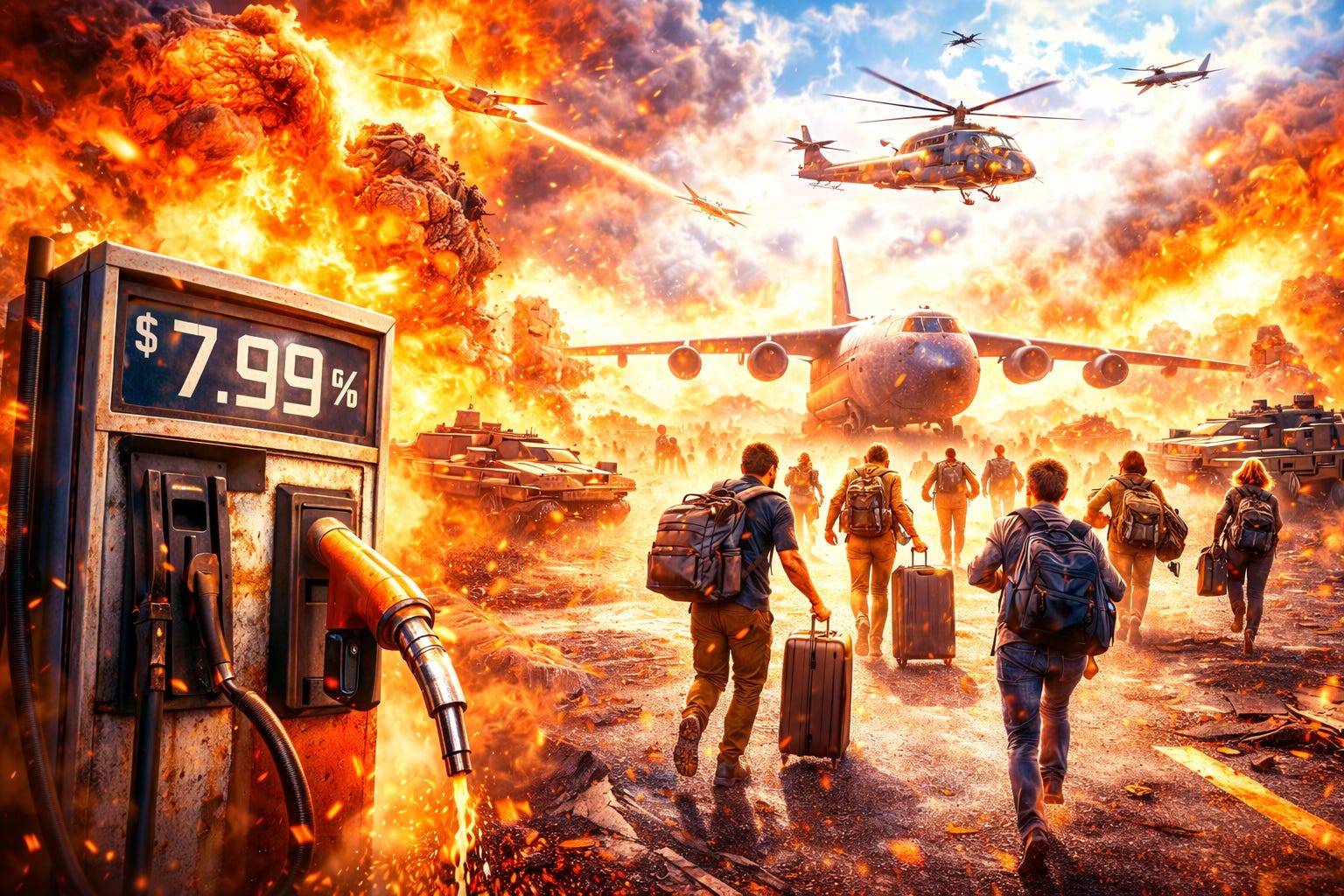
Gas prices just blew past where they were when Biden left office. Regular gasoline hit $3.109 a gallon on Tuesday, up from $2.95 a week ago, and analysts say we’re heading to $3.50 or higher by Easter. In California, it’s already $4.67. The disruption to global crude supplies from the Iran war and Tehran’s counterattacks on Gulf infrastructure is sending wholesale markets through the roof. Analyst Tom Kloza warned that if you start messing with oil installations in Saudi Arabia and Kuwait, you’re throwing things into the mix we haven’t seen before. Forty percent of Americans live paycheck to paycheck. For them, every penny at the pump matters. And here’s the kicker from a 2025 research paper. When oil prices surged after Russia invaded Ukraine, the wealthiest one percent of Americans captured more than half the windfall profits from energy companies. Working people paid more. Rich people got richer. KPMG’s chief economist Diane Swonk says stagflation isn’t impossible now. Rising prices and falling growth at the same time. Trump promised to fix the affordability crisis. Instead, he started a war that’s making it worse.
Today is Tuesday, March 3rd, 2026. And that’s the way it is. Good night.