


Good Day, this is the Commonwealth Report.
News for the public, not the powerful.
Is the Planet About to Get Supersized Heat It Can’t Handle?
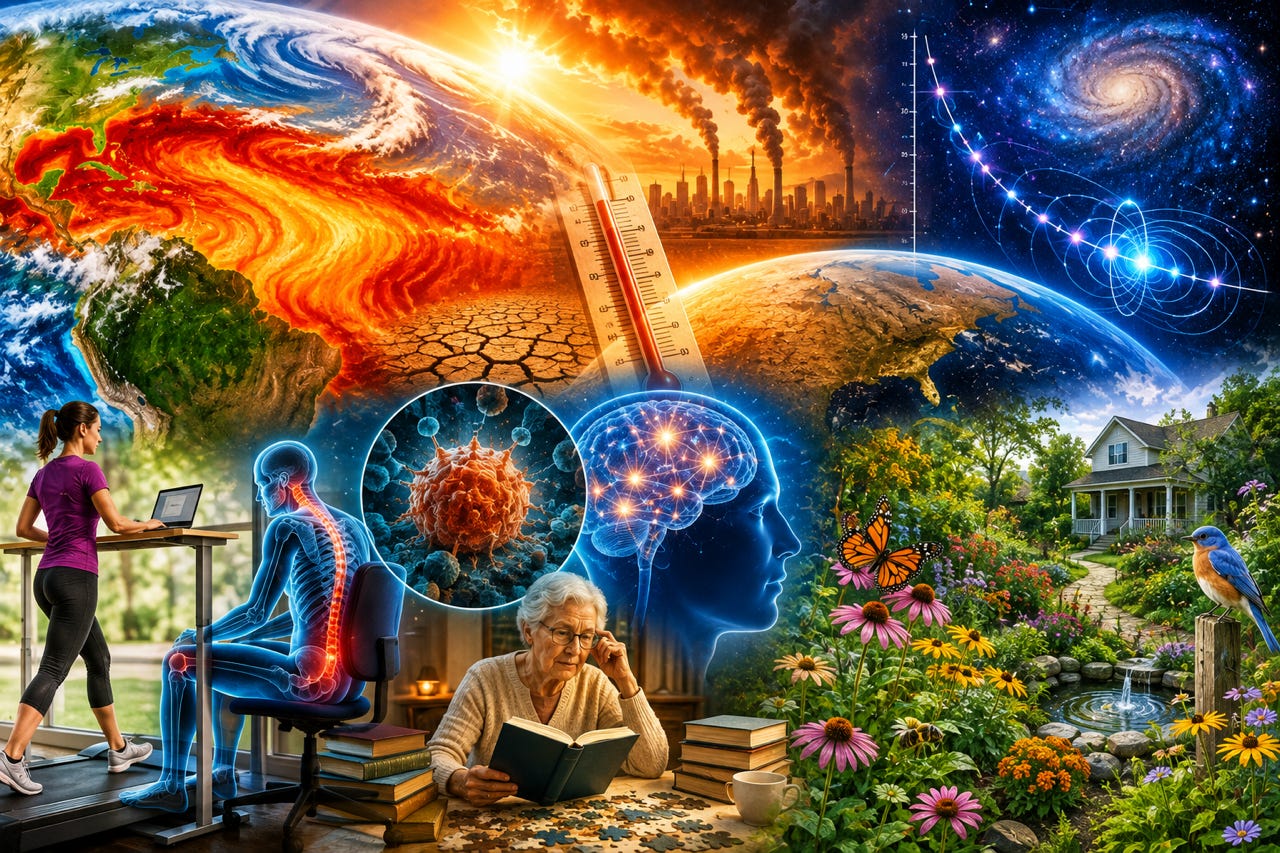
The United Nations just dropped a warning that should stop you cold. El Niño is supersizing right in front of our eyes. That’s not my language, that’s UN Secretary General António Guterres. He says the science leaves no room for doubt. The planet is in uncharted waters, and those waters are heating up fast. Forecasters say this El Niño could be the biggest in at least a 1,000 years, stacking on top of a planet already cooking from decades of fossil fuel pollution. The result? 2027 is on track to blow apart every heat record we’ve got. We’re already seeing the damage. Wildfires tearing through Indonesia. Monsoon rains weakening over India. The World Food Programme says this could push 50 million more people into hunger. This isn’t a distant problem. It’s happening now, to real families, while the fossil fuel industry keeps cashing checks.
Can the World Really Say There’s No Good Outcome Left?
As if that wasn’t enough, the UN Environment Programme just told us flat out, there are no good outcomes above one point five degrees of warming. And we’re going to blow past that mark. Even in the rosiest scenario, global heating hits at least one point eight degrees. The report says overshooting the Paris Agreement target is now unavoidable, possibly within just a few years. Glaciers could lose a quarter of their mass by twenty one hundred. Sea levels could climb 13 centimeters. Global food production could drop up to 14% by 2025. The president of Palau called this a fork in the road moment for the planet. Scientists say we can still get back to 1.5, but only with deep, immediate emissions cuts and pulling carbon from the sky. That takes political will our leaders in Washington have shown zero interest in finding.
Have Scientists Finally Caught a Glimpse of Dark Matter?
Now to something stranger, and honestly kind of thrilling. Scientists working nearly a mile underground in South Dakota say they may have caught the first real hint of dark matter, the invisible stuff that makes up most of the matter in our universe, stuff we’ve never seen, only inferred from its gravity. Researchers at the Sanford Underground Research Facility recorded a single strange particle interaction using ten tons of liquid xenon. Physicist Sam Eriksen of the University of Bristol says it could be the first hint of a dark matter observation. Other scientists urge caution, we’ve chased false alarms before. But if it holds up, it would be the first time humanity has actually seen the material that holds galaxies together. Sometimes the universe’s biggest mysteries crack open a millimeter at a time.
Is Your Desk Chair Quietly Raising Your Cancer Risk?
Here’s one that hits close to home for anyone stuck behind a screen all day. A massive study out of the University of Glasgow followed over 91,000 people for more than 12 years. The finding? Every extra hour of sitting in one long, uninterrupted stretch raised the risk of dying from cancer by 9%. It wasn’t just how much you sit total, it was sitting still without moving. The good news, breaking that time up with light movement made a real difference. Swapping just one hour of prolonged sitting for light activity cut cancer death risk by 12%. Researchers say the fix doesn’t need a gym membership, just getting up, stretching, walking to the kitchen. For millions of Americans stuck at desks with no paid breaks, this is a workplace fairness issue too, not just a health one.
Could Your Career Be the Real Secret to a Sharp Mind?
Here’s some hope if you’ve spent your life grinding through a demanding job. New research out of Italy found people who spent decades in challenging careers, stayed in school longer, or kept up mentally tough hobbies held onto sharper memories in old age. Researchers at the Scuola Internazionale Superiore di Studi Avanzati studied 45 older adults and found this trait, cognitive reserve, predicted memory accuracy no matter how hard the test got. Here’s the twist. Emotional intelligence showed no connection to memory accuracy at all. It only changed how fast people reacted to a happy face, and even that flipped depending on the task. So keep learning something hard. Your brain doesn’t care how emotionally in tune you are, it cares whether you keep using it.
Geeky Science Alert. Can Ripping Out Your Lawn Save the Planet, One Yard at a Time?
We’ll close on something you can go do this weekend. James Reed McGuire and Crystal Fritz moved from Chicago to Highland Park, Illinois, and decided their lawn was doing nothing for the planet. So they ripped it out. McGuire, a dedicated birder, couldn’t stand turf grass that gave nothing back to nature. Their first attempts were a mess, scattering wildflower seeds with no plan and digging up sod by hand. But they kept learning, kept planting native species, and now their yard is a certified wildlife habitat crawling with foxes, rabbits, butterflies, and birds. Neighbors stop to ask questions. Kids stop to stare. Turns out this couple joined a nationwide movement of Americans deciding the manicured lawn isn’t worth the water, the chemicals, or the silence it leaves behind.
And that’s the way it is, Today Friday, September 4th. I’m Thom Hartmann.


