


Good Day, this is the Commonwealth Report.
News for the public, not the powerful.
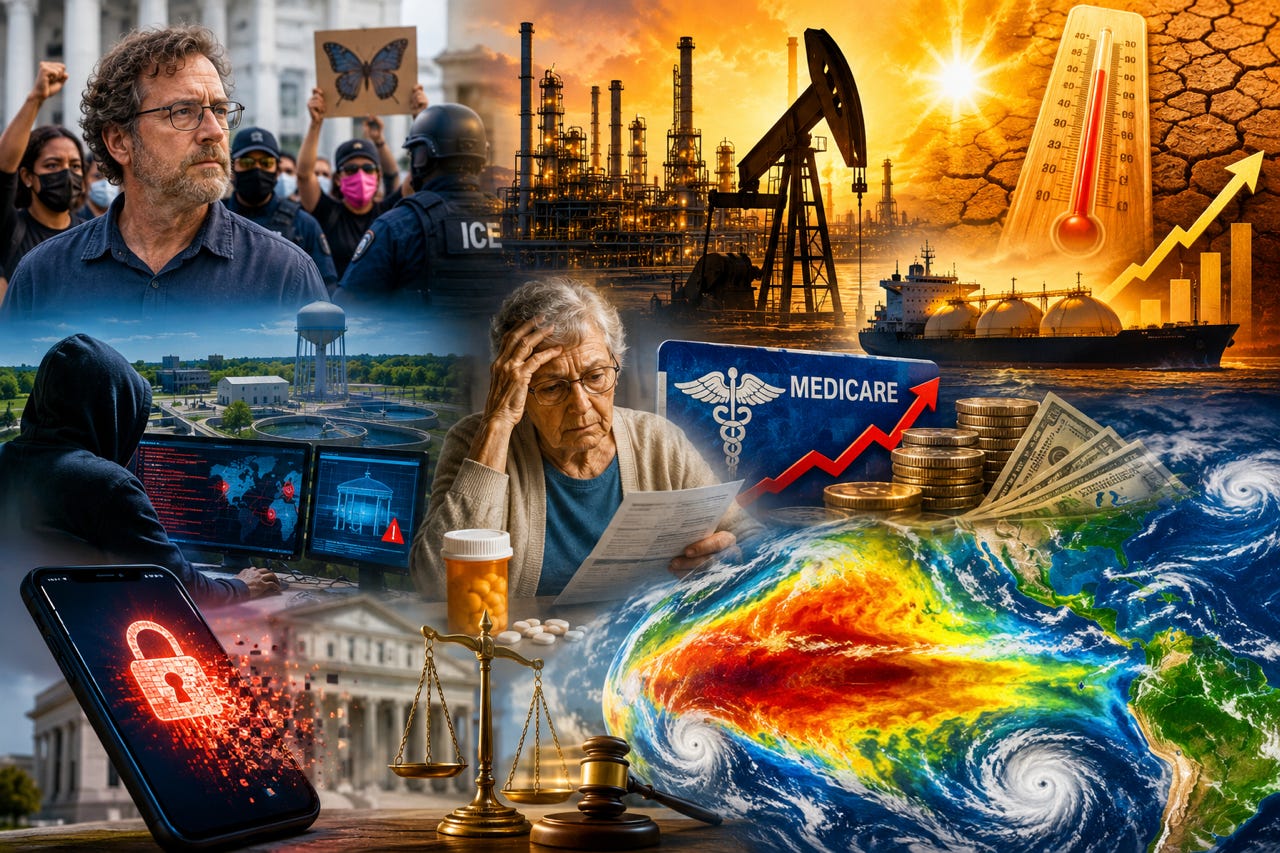
Is Teaching Now A Federal Crime?
Erik Davis teaches at Macalester College in Saint Paul. Today he’s facing federal prison. He’s one of fifteen indicted in June under a 94-page indictment that the Justice Department says ties them to a group called Direct Action Minnesota and to the antifa movement. The charge is conspiracy to impede or injure a federal officer. Six years behind bars. Most of those pages are Signal chats and social media posts about blockades outside the Whipple federal building, where ICE runs its regional operation. Davis says the length is hiding how empty it is. “I’ve seen people pad out papers when they’ve got nothing to say,” he told the Guardian. These charges land while other Minnesota protester cases keep getting tossed out. Is this law enforcement? Is this a warning shot fired at everybody who might show up at a protest next time?
Big Oil Doubles Its Money While the Heat Kills
Oxfam ran the numbers ahead of this week’s earnings reports. The world’s six biggest oil and gas companies pulled $23 billion in the first quarter. This quarter, $45 billion. Full year, one hundred f$47 billion, more than they made in the previous 21 months combined. Chevron quadrupled its take to $1,200 a second. ExxonMobil tripled to $1,800 a second. Oxfam found emissions from just five of those companies were enough, on their own, to cause one in four heat waves recorded worldwide since 2000. A late June heat wave in Europe killed more than 10,000 people. Oxfam’s climate lead Mariana Paoli said the industry is “making a killing, literally and figuratively.”
It gets worse at your kitchen table. Oil Change International reported Tuesday that Trump's export permits and gas-burning AI data centers could push wholesale natural gas 80% above the last decade's average by 2040. Nearly 80 million Americans already can't pay their power bill. It now appears they're baking the planet and then billing you for the privilege.
Who’s Hacking Minnesota’s Drinking Water?
More than 30 Minnesota communities had their water systems targeted Sunday and Monday in what officials call a coordinated cyberattack. Plymouth, South Saint Paul, Maple Plain, and Braham confirmed they were hit. The mayor of Maple Plain declared a state of emergency. Braham told residents to cut back on water and shut a treatment plant down. State officials say the attacks were contained and their response worked as intended. They also admit they don’t know how many places got hit. The Minnesota Department of Health warns hackers, terrorists, and plain old vandals all threaten drinking water now. Here’s the thing about infrastructure. No one thinks about it until the tap runs brown. We’ve spent decades letting these systems rot while telling ourselves the free-market would sort it out.
Why Seniors are Paying More for Medicine Next Year?
The Trump administration is killing a subsidy that kept Medicare drug premiums from spiking. Three point six billion dollars this year, gone after 2026. Almost 25 million Americans are in standalone Part D plans. An administration official says 45% will see monthly increases of $11 to $20 and 30% will pay under $10 more. CMS Administrator Mehmet Oz called the program a bailout and said the market is stable now. Tell that to a retiree on a fixed income splitting pills to make the bottle last. The number of drug plans has already dropped by half in two years because insurers walked away. Washington always finds money for oil companies and billionaires. Somehow the well runs dry when Grandma needs her heart medication.
Is The Biggest El Niño Closing In?
Climate scientist Zeke Hausfather looked at 667 forecast runs across 14 models and found something nobody has ever seen. This El Niño could push tropical Pacific temperatures 6.5 degrees Fahrenheit above normal. That’s nearly 1.5 degrees past the record set in 2015. He called it a “truly mind-blowing margin.” The peak hits between November and February, so 2027 takes the beating. Global temperatures could run three degrees above pre-industrial levels, blowing past the Paris target. Dartmouth researcher Justin Mankin says the damage could reach $10 trillion by 2032. Hausfather admits no model has ever been tested this far out. More heat, more drought, more fire, more flood. And the companies from our second story just posted record profits.
Geeky Science. Can Your Phone Legally Wipe Itself?
There’s an Android system called Graphene OS with a duress password feature. You hand the authorities a PIN, they type it in, and the phone erases everything. Sam Tunick, from our first story, an Atlanta activist tied to the Stop Cop City movement, flew home from the Dominican Republic last January. Customs officers wanted look at his phone. The phone came back empty. Ten months later, he says, agents pulled him over for a taillight and arrested him. He’s charged with destroying evidence, and he denies using the feature. Privacy experts told the Guardian there’s no known precedent for this case. One warned the prosecution treats that software as criminal by default. Tunick’s lawyers say he was interrogated without the lawyer he asked for, under a phony pretext. Whether your data belongs to you or the government may come down to this one case.
And that’s the way it is, Today Wednesday, July 29, 2026. I’m Thom Hartmann.


